

With the average cost per lead climbing to $213.60 in 2026, every prospect who goes silent after a discovery call is a direct hit to your profit margins. You've likely felt the frustration of a pipeline cluttered with “thinking about it” leads who never actually pull the trigger. It's a common bottleneck where high-quality intent is wasted because your high ticket lead follow up relies on manual effort rather than a predictable, high-authority system. You know your team is capable of more, yet the lack of a structured persistence framework keeps your ROI lower than it should be.
Stop settling for a leaky pipeline and start building an infrastructure that demands conversion. This article provides the blueprint to master a multi-channel persistence framework that turns ghosted prospects into high-ticket closings. We'll break down how to define clear roles for your setters and closers, optimize your existing lead flow, and build the foundation for $10M+ scale. It's time to transform your follow-up from a series of desperate reminders into a professional engine for growth.
Key Takeaways
- Combat “Trust Decay” by implementing a rapid response system that maintains your authority within the critical 48-hour window after a discovery call.
- Master a multi-channel high ticket lead follow up framework that uses the “Rule of 9” to stay top-of-mind across SMS, email, and social platforms.
- Increase your ROI by separating the roles of setters and closers, making sure your top closers don't waste time on manual outreach.
- Build an unbreakable conversion infrastructure by combining strict CRM hygiene with a strategic blend of automated sequences and personalized human touchpoints.
- Scale your operation beyond founder-led efforts by recruiting elite sales talent that's ready to execute professional playbooks.
Why Your High-Ticket Leads Are Ghosting (The Trust Decay Problem)
High-ticket lead follow up isn't a polite reminder or a courtesy call. It's the strategic bridge between a prospect's initial interest and their final investment. Most business owners fail here because they treat follow-up as an afterthought. If you don't have a rigorous system, you don't have a scalable business; you have a series of lucky breaks. When a lead goes silent, it's rarely because they lost interest in the solution. It's because you allowed the gap between the call and the close to become a vacuum.
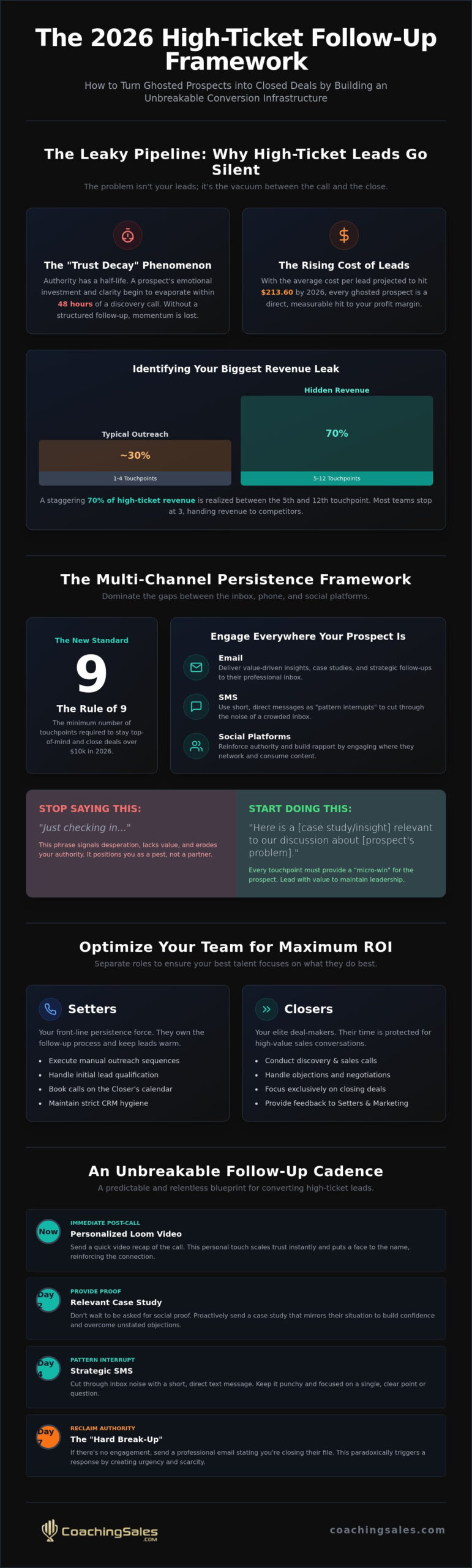
The “Trust Decay” phenomenon is the silent killer of high-ticket pipelines. Authority has a half-life. Within 48 hours of a sales call, the prospect's emotional investment begins to evaporate. The clarity they felt during your pitch is replaced by the friction of their daily operations. If you aren't there to reinforce the vision, they will ghost. It's not that the lead is “bad.” It's that your infrastructure failed to maintain the momentum you worked so hard to build. Stop blaming your marketing and start looking at your internal lead management system. If your process isn't airtight, your revenue will always be inconsistent.
Never use the phrase “just checking in.” It's a death sentence for your brand equity. It reeks of desperation and a total lack of value. Every touchpoint must project leadership and authority. If you aren't moving the needle or providing new insight, you're just noise in their inbox. Premium prospects want to be led, not pestered. If your follow-up doesn't feel like a continuation of the value you provided on the call, you're actively eroding the trust you've built.
The Speed-to-Lead Fallacy in High-Ticket
In 2026, responding to an inquiry in five minutes is no longer a competitive advantage. It's table stakes. If you can't do that, you're already out of the game. The real differentiator for $10M+ scale is proactive persistence. Reactive speed handles the easy wins, but proactive systems capture the high-value clients who need more than one touchpoint to commit. When you're slow to follow up, you signal a lack of operational excellence. Premium clients don't trust sloppy operations with six-figure investments. They want to see that you are as disciplined in your sales process as you are in your service delivery.
Identifying Your Revenue Leaks
Audit your sales calendar today. Most teams stop their outreach after two or three attempts. This is where your profit goes to die. Industry data suggests that a staggering 70% of high-ticket revenue is realized between the 5th and 12th touchpoint. If your team is stopping at the third email, you're essentially handing your marketing budget to your competitors. You don't need more leads; you need to maximize the ones you've already paid for. Before you pour more resources into lead generation, conduct a thorough sales team audit to identify the specific revenue leaks choking your pipeline. If a lead isn't currently in your CRM with a clear, scheduled next step, that lead effectively doesn't exist. Fix the leak before you try to pour more water into the bucket.
The 2026 Multi-Channel Persistence Framework
High-ticket sales aren't won on the first call. They are won in the gaps between the inbox, the phone, and social platforms. In 2026, the “Rule of 9” is the new standard for closing offers above $10k. If you stop at three touches, you're essentially handing your leads to a competitor who is more persistent. Effective high ticket lead follow up requires you to be everywhere your prospect is, without becoming a nuisance. This is omni-channel dominance. It means moving beyond a crowded email inbox and entering the more personal spaces of SMS and social media.
The psychological shift is critical. You must stop acting like a pursuer and start behaving like a problem solver. Every touchpoint must provide a “micro-win” for the prospect. This is value-stacking. If your message doesn't help them solve a specific problem or gain a new perspective, don't send it. When you lead with value, you maintain your authority. If you struggle to maintain this level of consistency, implementing proven Sales Playbooks can provide the structure your team needs to execute without hesitation.
The 5-Step High-Ticket Cadence
A professional cadence is predictable and relentless. Start with an immediate “Post-Call” Loom video. This level of personalization scales trust instantly by putting a face to the name. On Day 2, drop a relevant case study. Don't wait for them to ask for proof; provide it proactively. By Day 4, use an SMS pattern interruption. Keep it short, punchy, and direct to cut through the noise. If they still haven't engaged by Day 7, it's time for the “Hard Break-up.” Reclaim your authority by letting them know you're closing their file. Paradoxically, this is often what triggers the final commitment.
Leveraging Video and Voice Notes
The digital landscape is flooded with automated text. To stand out, you must humanize the process. Some industry professionals report that video follow-up generates significantly higher response rates compared to standard text emails. Video allows you to convey tone, empathy, and expertise in a way that words on a screen cannot. Similarly, using voice notes on LinkedIn or via SMS creates a “face-to-face” advantage in a remote-first world. It proves there is a real human invested in their success. In an era where 67% of organizations are using AI-enabled sales and marketing tools, the human touch is your ultimate competitive edge.
Setters vs. Closers: Defining Roles in the Follow-Up Loop
Stop asking your top closers to play digital detective. If your highest-paid sales talent is spending hours chasing prospects who ghosted a week ago, your unit economics are broken. In a $10M+ operation, roles are surgical. A high ticket lead follow up system only scales when you separate the volume-heavy outreach from the high-stakes closing. You need a clear division of labor between your Sales Setters and your closers. This ensures your calendar stays full of qualified re-calls while your closers focus exclusively on revenue-generating conversations.
The Sales Setter is the engine of your persistence. Their job is to revive dead leads and manage the long-term nurture bucket. They handle the “Rule of 9” touches across SMS and social media, ensuring no prospect falls through the cracks. Once the prospect re-engages and shows intent, the Setter creates a seamless hand-off to a Done For You Closer. This transition must be invisible to the prospect. It should feel like a natural escalation of the relationship, moving from logistical support to expert consultation. To make this work, you must incentivize follow-up through commission structures that reward Setters for booked re-calls and closers for final contracts.
The Setter's Responsibility: Volume and Velocity
Setters own the “Long-Term Nurture” bucket. This is where leads go when they aren't ready to buy today but will be ready in 90 days. They use micro-engagements, such as sharing a relevant podcast or a new industry insight, to keep your brand top-of-mind. This prevents lead decay without burning out your closers. The Setter monitors engagement metrics and knows exactly when to pass a lead back to the Closer for the final kill. They are the gatekeepers of your sales calendar, ensuring only high-intent opportunities reach the closing stage.
The Closer's Responsibility: Authority and Depth
The Closer's role in follow-up is about depth, not frequency. When a Closer executes high ticket lead follow up, it must feel like an elite intervention rather than a desperate check-in. They perform “Deep-Dive” follow-up by reviewing call transcripts and addressing specific, nuanced objections that the prospect raised. This isn't about pestering; it's about solving the remaining friction. By stepping in only at critical moments, the Closer maintains a high-status position. They aren't “chasing” the lead; they are the experts providing the final piece of the puzzle. This authority is vital when closing the loop on stalled contracts or payment links.
Building an Unbreakable Lead Conversion System
Scale is impossible without a single source of truth. If a lead's status isn't updated in your CRM, that lead effectively doesn't exist. Relying on your sales team's memory is a liability that will cap your growth well before you hit the $10M mark. A professional high ticket lead follow up system requires a “system first, human second” approach. This means your CRM must dictate the daily actions of your team, not the other way around. When you codify your process, you remove the emotional friction of deciding who to call and when.
The secret to high-level conversion is knowing where to use software and where to use humans. Automation should handle the logistical heavy lifting, such as scheduling reminders and sending initial confirmation texts. However, the actual persuasion must remain human. You cannot automate the level of trust required for a $20k or $50k investment. Use your tech stack to trigger alerts when a prospect re-opens a proposal or when a lead has stalled for more than 24 hours. These triggers allow your team to strike while the intent is high, maximizing the ROI of every lead in your pipeline.
Standardising Your Sales Playbooks
Consistency is the hallmark of an elite sales department. Every member of your team must operate from a Custom Sales Playbook that standardises your outreach. This eliminates the awkward “just checking in” vibe that kills authority. Your scripts should provide a clear path for re-engagement, such as sharing a specific insight tailored to their industry. When a prospect uses the “I need to talk to my spouse” objection post-call, your playbook must provide a battle-tested response that keeps the momentum alive without sounding pushy. Build your own Sales Playbooks to eliminate guesswork and ensure every touchpoint reinforces your brand equity.
CRM Automation for High-Ticket
Modern CRM platforms are more than just digital Rolodexes; they are the central nervous system of your sales operation. Set up “Lead Stalled” triggers to immediately alert your Setters when a prospect hasn't moved stages within your defined timeframe. Use automated email nurture sequences to provide continuous value, but never let them replace human outreach. These sequences should support the conversation, not lead it. By integrating tracking tools that notify you the moment a prospect re-opens your contract, you give your closers the “face-to-face” advantage of calling at the exact moment the prospect is thinking about the deal. This level of technical fluency is what separates market leaders from also-rans.
Scaling Your Follow-Up with Elite Sales Talent
Systems provide the skeleton of your business, but talent is the muscle that drives it forward. You can build the most sophisticated CRM automation in the world, but it will fail if the person executing the tasks lacks the discipline to follow through. A high ticket lead follow up strategy is only as effective as the A-Players running the play. In a $10M+ operation, there is no room for “good enough” outreach. You need a team that views the 9th touchpoint with the same intensity as the first discovery call. If your sales staff treats follow-up as a chore rather than a high-stakes endurance sport, your revenue will always hit a ceiling.
The transition from founder-led follow-up to a professional sales department is the most critical pivot you will make. Many founders stay trapped in the weeds because they believe no one else can maintain their level of authority. This is a bottleneck, not a badge of honor. Professional scale requires you to step out of the operational loop and plug in a vetted team that is already trained in the mechanics of persistence. When you move from being the primary chaser to the architect of the system, your business finally gains the momentum needed to dominate your market.
Recruiting for High-Performance Follow-Up
The hiring market for elite sales talent is more competitive than ever in 2026. High Ticket Sales Recruiting is no longer about finding people who can talk; it's about finding people who can execute. You must vet specifically for “Sales Grit”—the psychological trait that thrives in the long-term nurture phase. Elite candidates are selective. They want to see that you have the infrastructure to support their success. By hiring a dedicated Setter for your high-ticket offer, you create an immediate ROI. This role ensures your pipeline stays hot, allowing your closers to focus exclusively on high-leverage conversations that move the needle. Once you've recruited elite closers, a structured sales onboarding process for closers ensures they reach full quota attainment within 30 days rather than fumbling through a costly six-month ramp-up.
Next Steps: Auditing Your Sales Infrastructure
Your first move today is to identify the single biggest revenue leak in your current process. Is it the lack of a Day 2 case study drop? Is it a CRM full of leads with no scheduled next steps? Fix the most glaring hole first. Use a structured sales team audit checklist to systematically diagnose every bottleneck across your conversion infrastructure before investing in more traffic or headcount. Take the 24-hour challenge: implement one new multi-channel touchpoint into your cadence right now. Whether it is a personalized video or a direct SMS, take action to reclaim a stalled lead. If you are ready to stop managing the minutiae and start leading a professional department, it is time to act. Get elite closers and setters placed in your business and install the human infrastructure required for $10M+ scale. Your growth depends on the quality of the people you put in the driver's seat.
Build the Infrastructure for Absolute Market Dominance
Your current revenue is a direct reflection of your follow-up infrastructure. If you're still relying on manual effort or a “one-and-done” approach, you're capping your potential. By implementing a multi-channel persistence framework and separating the roles of setters and closers, you transform high ticket lead follow up from a liability into a predictable profit engine. You've seen the roadmap. Now you must decide if you'll stay in the operational weeds or build a system that operates at the pinnacle of the industry.
Scaling to $10M+ requires more than just software; it requires battle-tested expertise and A-Player execution. We specialize in $10M+ sales infrastructure, providing everything from custom high-ticket sales playbooks to vetted A-Player sales talent placement. It's time to stop chasing leads and start commanding your pipeline. Scale your revenue with our Done-For-You Sales Closers and install the elite systems your business deserves. The path to the top is paved with professional persistence. Build it today.
Frequently Asked Questions
How many times should I follow up with a high-ticket lead before stopping?
Follow up at least 9 to 12 times across different channels before moving a lead to long-term nurture. Stopping after three or four touches wastes the high cost-per-lead investment you've already made. High-ticket decisions are complex and require consistent presence to maintain authority. Once you reach the 12th touch without a response, shift the lead to a background sequence. This ensures your team stays focused on active intent while keeping the door open for future re-engagement.
Is automated email follow-up effective for $10k+ offers?
Automation is effective only as a support mechanism, not a replacement for human outreach. Use it to deliver value-heavy content like whitepapers or case studies between personal touchpoints. For offers exceeding $10k, the prospect needs to feel a direct connection to your expertise. Purely automated sequences often feel cold and generic. This can erode the high-status positioning required for high ticket lead follow up in a premium market.
What is the best time of day to follow up with a B2B high-ticket prospect?
Aim for early mornings between 8:00 AM and 9:00 AM or late afternoons after 4:30 PM in the prospect's local time zone. These windows typically avoid the mid-day operational chaos where your message is easily buried. Avoid Mondays when inboxes are flooded and Friday afternoons when focus shifts to the weekend. Consistency across these specific windows increases the likelihood of catching a decision-maker when they have the mental bandwidth for a strategic conversation.
How do I follow up without sounding desperate or pushy?
Always lead with a micro-win or a specific piece of value rather than asking for their time. Share a recent industry result or a relevant strategy that addresses an objection raised during your initial call. This shifts the dynamic from a pursuer to a problem solver. If you are providing genuine insight, you aren't pestering; you're consulting. High-status follow-up focuses on the prospect's goals rather than your desire to close the deal.
Should I use SMS for high-ticket sales follow-up in 2026?
Yes, SMS is a mandatory component of a modern multi-channel framework. It offers significantly higher open rates than email, provided you maintain strict compliance with TCPA regulations. Keep your texts short, punchy, and direct. Use them for pattern interruptions to prompt a quick response or to confirm a re-call. When used professionally, SMS cuts through digital noise and keeps the momentum of the sales cycle moving forward.
What do I do if a lead ghosts me after seeing the price?
Reframe the conversation around ROI and the cost of inaction rather than the sticker price. Ghosting usually indicates a failure to bridge the gap between the investment and the expected outcome. Send a short video or voice note addressing the specific transformation they desire. Remind them why they took the call in the first place. If they still don't respond, use a break-up message to reclaim your authority and close the file.
How do I re-engage a lead that has been cold for over 3 months?
Use a pattern interrupt that references a specific change in the market or their industry. Avoid mentioning the previous failed outreach. Instead, present a new case study or a fresh perspective that wasn't available 90 days ago. This gives the prospect a logical reason to re-engage without feeling guilty about ghosting you. Successful high ticket lead follow up for cold leads relies on appearing as a persistent innovator rather than a stagnant vendor.
Should the closer or the setter handle the follow-up process?
Divide the labor based on the intensity of the touchpoint. Setters should handle the high-volume, initial follow-up and long-term nurture to keep the pipeline moving. Closers should only step in for deep-dive follow-ups that address complex objections or finalize contract details. This surgical division of labor ensures your closers stay focused on high-leverage calls while your setters maintain the velocity of the overall conversion engine.